Dental Implants in Tijuana
Single implants, implant bridges and full-arch implant treatment planned with CBCT imaging, named materials and written aftercare.
What is a dental implant?
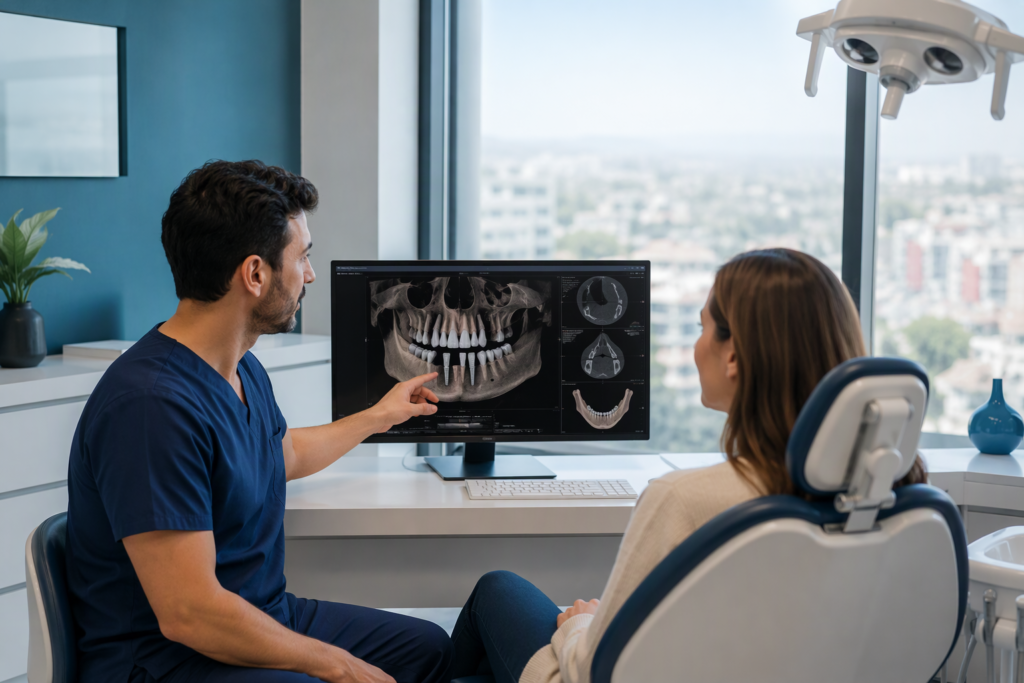
A dental implant is a titanium post that replaces the root of a missing tooth and supports a crown, bridge or full-arch prosthesis. The implant itself is only one part of the result: diagnosis, bone quality, gum health, bite forces, laboratory work and maintenance decide how well it functions over time.
How much does a full dental implant cost?
A complete single implant—placement, abutment and crown—is commonly benchmarked at $1,999 in current Tijuana package pricing, while U.S. fees are often several times higher. Treat this as a reference point, not a final quote: bone grafting, extraction, sedation, imaging, temporary teeth and warranty terms can change the total.
A written quote should separate implant placement, abutment, crown, grafting, imaging, medication, follow-ups and what happens if a part fails.
How many trips does implant treatment take?
Most implant cases need at least two trips because the implant must fuse with the bone before the final crown is attached. Simple cases can be shorter; grafting, sinus lifts or full-arch surgery can add visits or healing time. The written plan should state what happens on trip one, what heals between trips, and what is delivered on trip two.
- Single implant: placement, abutment and crown quoted as separate line items.
- Implant bridge: fewer implants can support several missing teeth when force and hygiene allow.
- All-on-4: fixed full-arch teeth on four implants for suitable candidates.
- All-on-6: added implant support for full-arch cases where bone and bite justify it.
- Bone grafting or sinus lift: only when CBCT shows the implant cannot be placed safely without it.
Get a written quote before you book anything
Send your recent X-rays or a U.S. treatment plan. A bilingual patient coordinator reviews your case with a dentist and replies with an itemized quote in U.S. dollars within one to two business days — no payment required.
Dental Implant FAQs
Most patients report pressure and soreness rather than sharp pain during the procedure because local anesthesia is used. After surgery, swelling and discomfort are usually managed with the prescribed medication plan. Severe or worsening pain is not normal and should be reviewed.
Uncontrolled diabetes, active gum infection, heavy smoking, recent radiation to the jaw, some bone medications and poor oral hygiene can raise risk. A CBCT scan and medical history decide candidacy; no responsible clinic approves implants from photos alone.
Ask for the exact brand, model, diameter, length and lot stickers for your records. Established clinics use systems with traceable components and available parts. The brand matters less than correct diagnosis, placement, restoration design and maintenance.
Sometimes, when bone, infection control and stability allow immediate placement. Many cases are safer staged: extract, graft or heal, then place. Same-day promises for every case are a red flag.
Implants can last many years when planning, surgery, restoration and home care are done correctly. Smoking, untreated gum disease, missed maintenance and bite overload shorten survival. Ask for written warranty conditions and follow the recall schedule.
Ask for the operative note, implant brand and lot stickers, CBCT or X-rays, medication list, warranty terms and the final crown details. These records help a local dentist maintain the work and help the clinic honor warranty terms.